

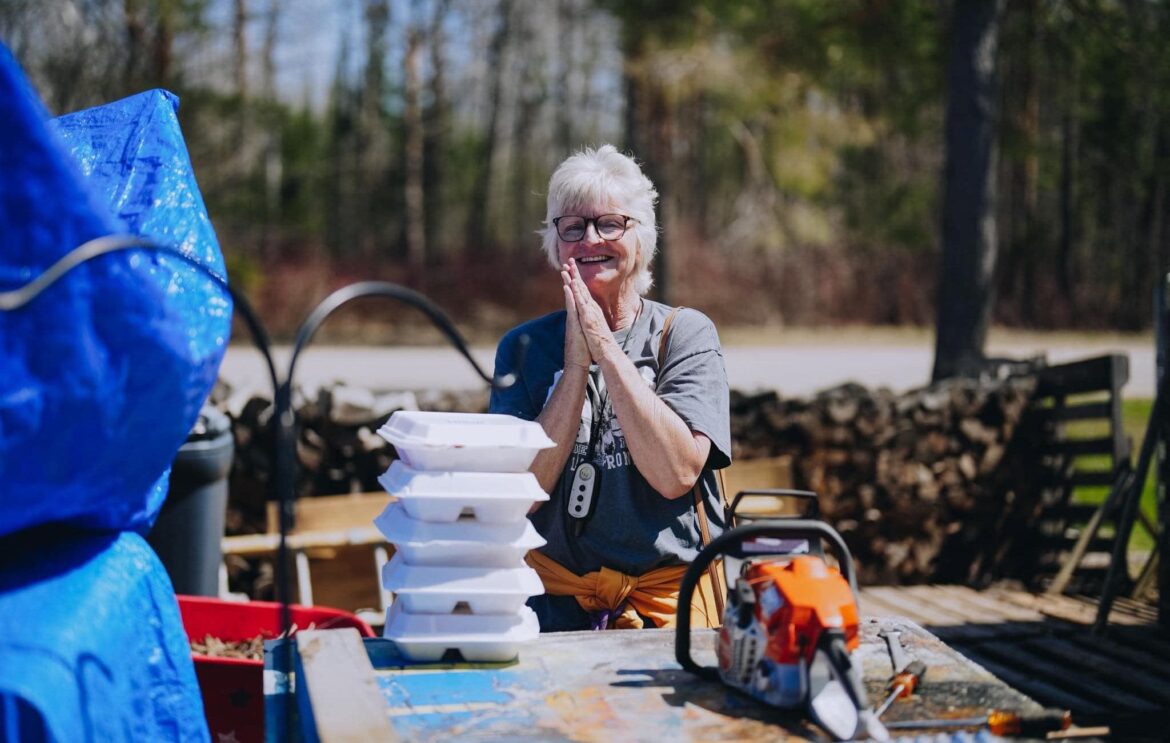
For Mercy Chefs, There Will Always Be One More
“Feed people. Just go feed people.”
In August 2005, Gary and Ann LeBlanc watched the horrific impacts of Hurricane Katrina unfold. As disturbing as the images coming out of New Orleans were for all of us, Gary was watching his hometown—neighborhoods he knew, streets he had walked and people he didn’t just know, but loved.
Days later, Gary found himself working in a mobile kitchen in the middle of the disaster zone.
“I’d never volunteered before. I had never stood in a mobile kitchen. I had no idea about that kind of world,” he recalled.
As a professional chef, he had traveled to New Orleans simply to help. But amid the chaos of mass feeding operations, he found himself unsettled—not only by the conditions, but by what felt absent from the experience itself.
“When I got home, I couldn’t shake what I had seen,” he said. “There was a lack of professionalism, a lack of sanitation and food safety.”
Yet for Gary, the deeper concern was the absence of dignity, care and love.
For months, he wrestled with what he had witnessed and what he believed could be done differently.
Then came what he describes as a lightning strike—a call from God he could no longer ignore:
Feed people.
“Then came what he describes as a lightning strike—a call from God he could no longer ignore.”
A Different Kind of Calling
Ann LeBlanc had spent decades in executive leadership roles in fundraising, marketing and event planning with organizations including The Christian Broadcasting Network and Regent University. She understood immediately that answering the call would not be easy.
“I knew I couldn’t ignore what the Lord was calling Gary to do,” Ann shared, “but I did introduce some reality checks.”
For instance, Ann pointed out that he would need to form a 501(c)(3), and that process could take up to a year.
“Gary got it in two weeks,” she said with a laugh.
And so, together, Gary and Ann began building what would become Mercy Chefs.
Have We Been Forgotten?
“Have we been forgotten?” This was the question Mercy Chefs understood was at the heart of every disaster zone they entered.
Their answer: “No, you have not.”
When Gary first imagined responding to God’s calling, he pictured a barbecue grill and a Yeti Cooler strapped to the back of his pickup truck.
“I couldn’t see much beyond that. I was still working my day job,” said Gary. “The journey we’ve been on was so far beyond my imagination, I probably would have been too afraid to pursue it if I’d envisioned what we have become.”
The first time Mercy Chefs served 400 meals in a month, in Gary’s words, “was earth-shatteringly unbelievable.”
Today, the organization provides more than 400,000 meals globally each month.
And as Mercy Chefs grew, the mission remained intensely personal.
“You know, we’re almost there, but we’ve just got to keep running,” Gary said, describing the feeling as “running alongside the train trying to grab the handguard.”
“One more. How do we serve one more?”
Staying Present
Over time, Gary and Ann began to recognize something else:
Some people live with the feeling of being forgotten every day. Sometimes it arrives in the aftermath of a natural disaster. Other times as food insecurity, rising costs or families struggling long after headlines fade.
This realization reshaped Mercy Chefs’ work.
What began as disaster response expanded into community kitchens, grocery distributions and Beacon of Hope sites designed to provide not only meals, but ongoing care, dignity and human connection.
In many places, Mercy Chefs now serves the same families week after week—people whose hardship is not tied to a single disaster, but to daily uncertainty.
“When you hand a parent a box of goods that they can make 50 meals with and recipes to show them how, they are empowered,” Ann said. “It can be transformational.”
Who Is Your One Today?
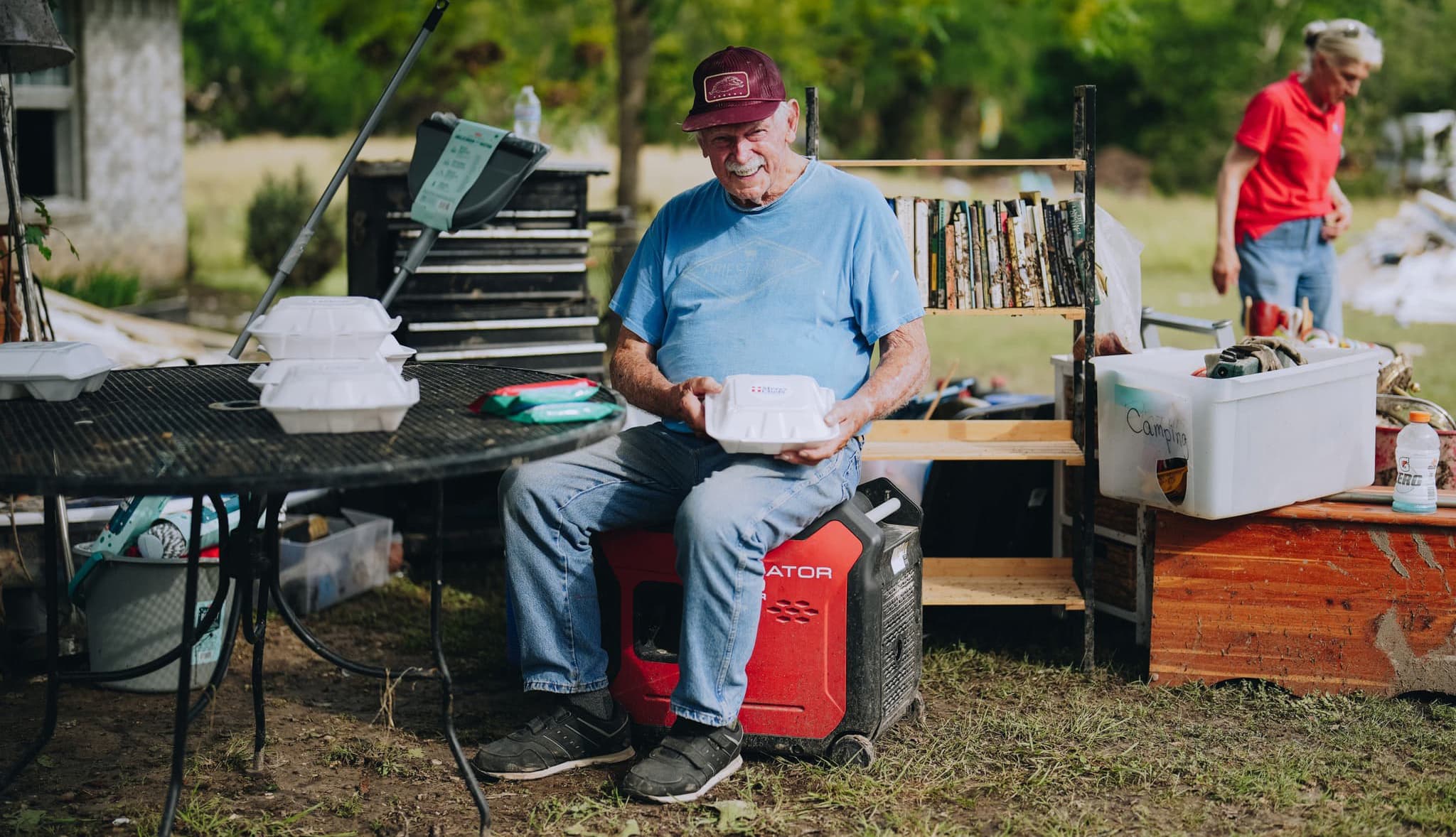
Ask anyone who has worked or volunteered with Mercy Chefs, “Who was your one today?” and they will immediately understand what you mean.
Mercy Chefs was serving in Michigan when a woman whose home had flooded arrived at a local church where meals were being distributed. She was caring for her elderly mother and had reached her breaking point.
“Chef Lisa saw her and just knew,” Ann recalled.
Lisa wrapped her arms around the woman, who immediately began to weep as they prayed together. She left with meals for her family and neighbors, but also something less tangible: the reassurance that she was not alone.
Days later, the woman returned—not for a meal, but to volunteer.
Water was still standing in her house as she began delivering meals to neighbors.
“She changed her narrative from despair to helping others find hope.”
“She wasn’t being defeated any longer by the disaster,” Ann said. “She changed her narrative from despair to helping others find hope.”
Ensuring Sustainability
As Mercy Chefs expanded its footprint, deepened donor engagement and invested in long-term community presence, the organization sought a partner that could help sustain that momentum. That evolution led Mercy Chefs to The Curtis Group.
“With The Curtis Group, it’s not just, ‘Here are your 10 steps for a capital campaign,’” Gary shared. “They get in the boat and get on the oar with you.”
“The Curtis Group gets in the boat and gets on the oar with you.”
Over time, the partnership helped Mercy Chefs strengthen donor relationships, launch successful fundraising initiatives and continue building the infrastructure needed to support a rapidly expanding mission.
“There’s never a doubt that the guidance being given is the best you’re going to receive,” Ann said. “And during a time of significant growth, that trust is crucial.”
The partnership works because it is grounded in a shared commitment to preserving the heart of the mission while building the support needed to sustain it.
“As Mercy Chefs’ impact expanded, so did the opportunity for more people to become part of the mission. Our work together has focused on helping the organization build the relationships, systems and philanthropic support needed to sustain that growth while preserving the authenticity and heart that make Mercy Chefs so compelling to donors.”
– Wendy McGrady, President and Chief Operating Officer, The Curtis Group
Mercy Chefs + The Curtis Group
- Advancement Staff Training
- Campaign Planning Study
- Campaign Counsel
- Board Development
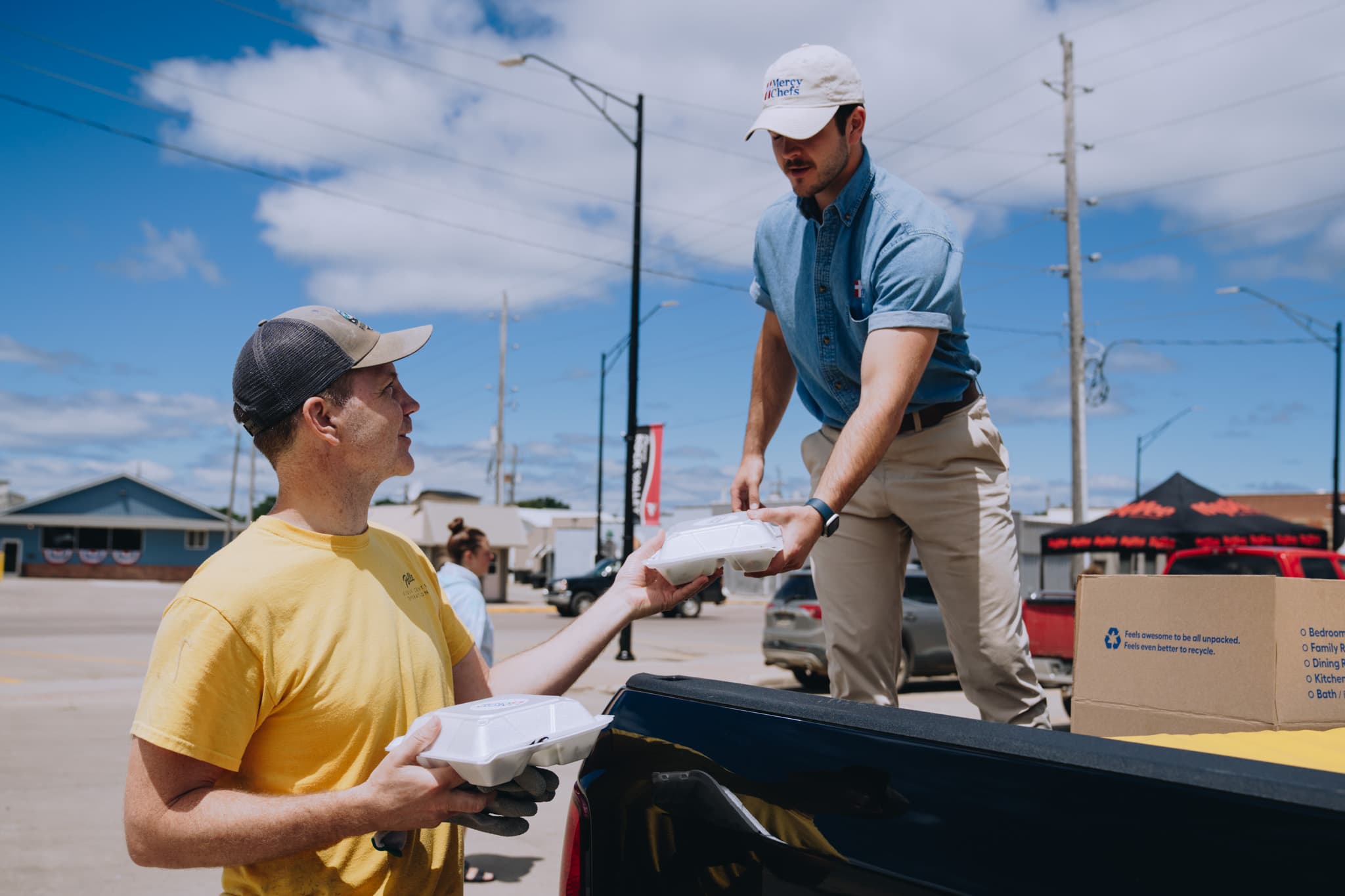
The Next 20 Years
“A professional chef once asked me what the best meal I had ever served was,” Gary said. “I told him that I hope it’s the next one.”
Twenty years after what Gary describes as a “lightning strike” moment, Mercy Chefs is serving hundreds of thousands of meals each month around the world through disaster response efforts, community kitchens and Beacon of Hope sites.
And yet, despite the scale of the organization today, Gary still talks about the mission the same way he did in the beginning:
One more person. One more meal.
“My vision has never been as big as God’s plan,” he shared. “So what will the next 20 years bring for Mercy Chefs? I have no idea. But it’s going to be so fun to watch what happens.”
Learn more about Mercy Chefs and follow their journey: mercychefs.com
